Pass a Polygraph Test (Lie Detector): Expert Tips - 2026
When applying for a vast range of civil service and law enforcement positions a polygraph test is administered as part of the screening process. It’s used to ensure that you are not only qualified for the position but that you are the type of person who deserves to be trusted with a position that requires a great deal of integrity. Learn more about how to pass a polygraph test below.
Are you applying for a position in the civil service or law enforcement industry? If you are, it’s highly likely that you’ll need to take a polygraph test.
The polygraph is known by a range of other names: the Psych Test, Truth Verification Test (TVT), Lie Detector Test, or Computer Voice Stress Analysis (CVSA).
Here are some exams that utilizes a Polygraph Test:
But you may be wondering just what is a polygraph test. And that’s where we’re going to start.
This test will require you to answer a range of different questions about yourself and different situations that you may have found yourself in throughout your life.
And the results of this test will play a very large part in deciding whether you will get the job that you’re applying for.
However, the test is not 100% accurate, and honest people often fail the polygraph. It’s not enough to simply tell the truth if you want to know how to pass a lie detector test.
We’re going to help you learn how to tackle the very challenging lie detector questions, with the most comprehensive and focused preparation course you can do.
We’re going to take a look at 15 tips for how to pass a polygraph test.
#1: Be Prepared
We often get asked: “What is the polygraph test?”
And while every agency slightly varies their presentation of the test, there are some things you can count on.
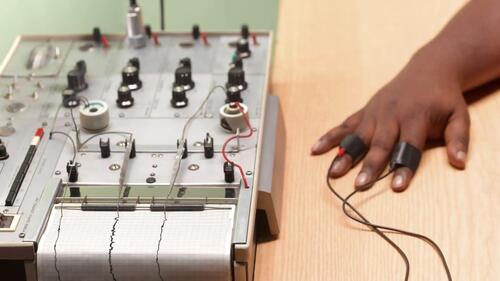
Modern polygraph machines most commonly look like USB hubs attached to laptop computers.
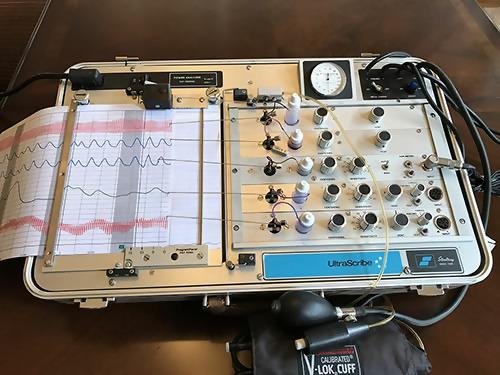
Similar to the devices you see in Hollywood movies, however, you’ll have the following monitors attached to you:
- Wires attached to your fingers to test perspiration and temperature
- Straps around your chest to gauge your breathing and heart rate
- The familiar blood pressure cuff around your arm
You may also have a clip microphone attached to your shirt and probes attached to your head.
It’s very intimidating – it’s designed that way. The polygraph test is purposely fashioned to make you uncomfortable.
#2: Be Honest
The questions you’ll be asked during the polygraph examination are based on the application form you completed at the beginning of the application process.
And while there are answers that could disqualify you from consideration for the role, honesty and consistency are the most important things.
If the answers you give during the polygraph test differ from the information you surrendered on your application, you’ll be interrogated further, and you’re likely to fail.
#3: How Can a Machine Tell if I’m Lying?
It can’t. There’s no such thing as an “honesty machine.” But the various devices attached to your body can read the physiological changes that occur when you’re questioned under pressure.
The machine looks for the spikes and peaks that take place when we experience internal conflict, such as:
- Fidgeting
- Avoidance of eye contact
- Sweating
- Stumbling over words, etc.
And there are less visible signals such as changes in blood pressure, breathing – and heart rate, and an increase in body temperature.
The polygraph detects these physiological changes and – in conjunction with the list of polygraph testing questions – the examiner can build a scientific judgement on the honesty of your responses.
However, as we mentioned at the beginning of this article, the polygraph test is controversial. It’s not 100% accurate.
And honest people fail all the time.
Preparation, therefore, is your first line of defense.
#4: Know the Composition of the Test
The polygraph examination is made up of three principal sections:
- The pre-test
- The actual test
- The post-test
You should consider the entirety of the time you spend in the interrogation room a valid part of the test.
The examiner will tell you when the actual test is going to begin, and they’ll indicate to you when it has ended. But as long as you have monitors attached to your body, you should consider the test to be in operation.
#5: The Polygraph Test Questions
We can’t give you a set list of polygraph questions, but you will generally be asked questions regarding:
- Your history of theft, including shoplifting and petty theft from your employer
- Involvement in drug trafficking, drug dealing, and organized crime of all sorts
- Your use of alcohol and illegal drugs
- Your use of medication, including steroids
- The integrity of the information you’ve provided in your application and during the test
- Your criminal record and/or arrests (usually excluding minor traffic offenses)
- Involvement in crime that has not been, thus far, detected
- The withholding of information or evidence that might affect your suitability for the role
- Your involvement in physical fights, including excessive force toward another person or partner
- The payment or acceptance of bribes
#6: Recognize the Types of Questions in the Lie Detector Test
There are three main types of questions you’ll experience during your polygraph or lie detector test:
Relevant questions: Relevant questions deal with genuine issues of concern. Relevant questions cross-examine the information you provided on your application form and dig into anything that may incriminate.
Example questions could be:
- Before applying to this agency, have you ever done anything wrong in your life?
- Have you ever physically harmed another person during a domestic dispute?
- Are you withholding information that might disqualify you from a role in law enforcement?
- Have you ever paid or accepted a bribe?
Irrelevant questions: The polygraph examiner uses irrelevant questions to establish a baseline. These questions don’t directly relate to the job or to the information you provided in your application.
Examples of irrelevant questions are things like:
- Is today Friday?
- Are you standing?
- Are you alive?
Control Questions (or Probable Lie Control Questions): These questions practically force us to lie. It shows the examiner your physiological response to lying so that they can compare it with your reactions to relevant questions later on.
Examples of probable lie control questions could be:
- Did you ever tell a lie during the first twenty years of your life?
- Have you ever borrowed something and failed to return it?
- Have you EVER stolen anything?
#7: Control Your Breath
Most of us know that breath control (i.e., slowing down the breath rate) has a positive effect on our overall sense of calm. Long, slow, deep inhalations and exhalations are commonly used in meditative practices to lower the heart rate.
Deep breathing techniques, therefore, will help to maintain a consistent heart rate and keep your blood pressure from rising throughout the actual test.
Learn how to beat a polygraph by remaining in control of your breathing in the PrepTerminal “Ace the Psych Test” training manual.
#8: Understand Your Body Language
Your examiner uses the readings on the polygraph machine, and the CVSA monitor, to gauge your responses to questioning. However, they’re also trained to recognize physical indications that suggest a person is lying.
Sit as still as possible throughout the entirety of the test. Make eye contact when appropriate and do not fidget.
#9: Remain Serious
The examiner may adopt a specific tone during your test. They may come across as friendly and helpful – trivializing the importance of the test – or they may adopt a cold and professional nature.
Either way, you should aim to remain impassive, serious, and professional.
Don’t snub friendliness, but don’t encourage it. And don’t allow aggressive questioning tactics to rile you.
#10: Take Your Time
There’s no rule that you have to finish the polygraph test as quickly as possible. Unfortunately, many people do not think about the benefits that come with slowing down.
You may find yourself talking fast, or might find that your heart is racing not because you’re lying, but because you’re worried about the importance of the test.
By slowing down and taking a deep breath (or two) before answering, you will feel more confident, which helps you come across better with the examiner.
#11: Do Not React to Accusations
Your examiner may try to make you even more nervous or agitated by accusing you of lying or accusing you of something bad. Do not let these accusations startle you or allow them to throw off your confidence.
This type of accusation can also cause some people to respond instinctively. When you do this you may tell the examiner something that you did not intend to or may reveal something about yourself that you do not want.
For example, reacting angrily could give the impression that you do not have good control of your emotions. Getting too nervous could also make the examiner believe that their accusation is accurate.
#12: Do Not Expand on Answers
Polygraph questions are designed to be “yes” or “no” questions because that’s what the machinery can respond to.
When you answer a question on the polygraph, give only the answer that is required. That means “yes” or “no” only.
A closed question, in the context of the polygraph test, can be challenging to answer, however – especially when a binary “yes” or “no” feels too simplistic. That is the point. The examiner wants you to keep speaking and say more than you need to. Don’t.
If the examiner asks for further clarification or explanation ask them what they are looking for. Only respond to what you are directly asked. Do not volunteer extra information.
The examiner is not there to be your friend. That means they are not someone that you want to ‘chat’ with. Instead, tell them only what they need to know (i.e., what they directly ask you for) and then get out.
#13: Control Your Response
The key here is to cause a ‘spike’ in your physiological response in regard to a control question. When you answer a question that is obvious you are telling the truth and your body responds it will create a new baseline.
For example, when the examiner opens the test they will ask you questions like “is the sky blue,” “Is your name X,” or “Is your birthdate X.” These are questions that they know the answer to and they use them to get a base of what your physiological response is to tell the truth.
If you can control your response to these questions, causing your physiological response to ‘spike’ as it would if you were lying, you can skew the results of the test.
This can give you a bit more leeway when it comes to answering questions that are uncomfortable and may cause you to ‘spike’ even if you’re telling the truth.
#14: Ignore the Results
Your polygraph results will likely not look like much to you if you can see them. In fact, they look only like lines on a screen. But if you look at those lines they could make you more anxious or nervous.
This also applies to any looks that you might get from the examiner or anyone else who might be in the room. Do not let their looks (either at you, each other, or the screen) cause you to feel insecure.
#15: Beware the Post-test
The examiner will let you know when the actual test is over, and they might encourage you to relax now that the hard bit has finished.
Don’t relax.
As long as you’re wired up, the test is still running.
The examiner will use the post-test period to obtain additional information about you. They might go back to some of your answers and challenge them.
Stay consistent and stick with your original answers.
What Happens if you Fail a Polygraph Test for Police?
- Unfortunately, if you fail the polygraph test for police officers you may be completely out of luck.
- That’s not to say that you will never get a job working for the police, but you will definitely have a much harder time of it.
- If you fail the test, the initial job that you applied for will likely reject you. And then, when you apply for another job they will ask if you have ever failed a polygraph test.
- On top of that, if you apply in the same department again or if you apply to a different law enforcement agency within the same state they may be able to send your polygraph results to the new facility.
- This is why it’s so important for you to do what you can to pass the polygraph examination the first time.
- That’s where our polygraph handbook can help.
Sample Police Polygraph Questions
There are a number of different types of questions you could be asked on a polygraph. This is especially true for civil service and law enforcement jobs.
The goal is to make sure that you are qualified for the position. That doesn’t just mean having the education necessary. It also means having integrity and a strong background. As a result, you may be asked:
- Have you ever used any other name for any purpose?
- Have you failed to list any current debts in your application?
- Have you applied with any other law enforcement agencies that you have not listed?
- Have you ever held a driver’s license in any other name?
- Have you ever been arrested for anything that you have not listed?
- Have you ever committed a serious undetected crime?
- Have you intentionally left out any part of your employment history?
- Have you ever been rejected for any law enforcement position in the past?
- Have you falsely listed any information relating to any special qualifications or skills on your application?
- Have you ever falsified an insurance claim?
- Have you ever been dismissed from any job you have held?
- Have you been given a polygraph with another agency?
- Have you provided a false operator’s license as proof of identification?
- Have you ever been asked to resign from any previous employment?
- Have you ever been a defendant in any administrative, civil or criminal matter which you have not listed?
- Have you answered all questions during this process truthfully?
- Have you deliberately falsified any information you have provided to this department?
Make sure you review the tips earlier in this article to help you answer these questions. And definitely check out our complete polygraph handbook for even more.
So, there you have it, everything you need to know to pass the polygraph test.
Our course is a complete polygraph handbook, helping you develop techniques for responding, convincing, and delivering consistency during your test.
We’ll help ensure that you’re best prepared with how to beat a polygraph test.
Good luck!