
Master the 16PF Personality Test (2025): Secure Your Career Edge
- Overview
- Curriculum
- FAQs
- Reviews
According to the Society for Human Resource Management, 32% of companies rely on personality assessments like the 16PF to screen candidates for executive roles alone. But without preparation, even qualified people get passed over—not for lack of skills, but because their responses highlight traits that don’t align with the job.
The issue? Studies show 30-50% of applicants try to game these tests, but built-in checks often catch inconsistencies, leading to rejection. Don’t risk it. Our 16PF prep course helps you respond authentically while avoiding common pitfalls.
⚠️ One careless answer could paint you as unfit for leadership, too anxious under stress, or unable to collaborate. And once flagged, you don’t get to explain yourself—the decision is final.
What is the 16PF Test?
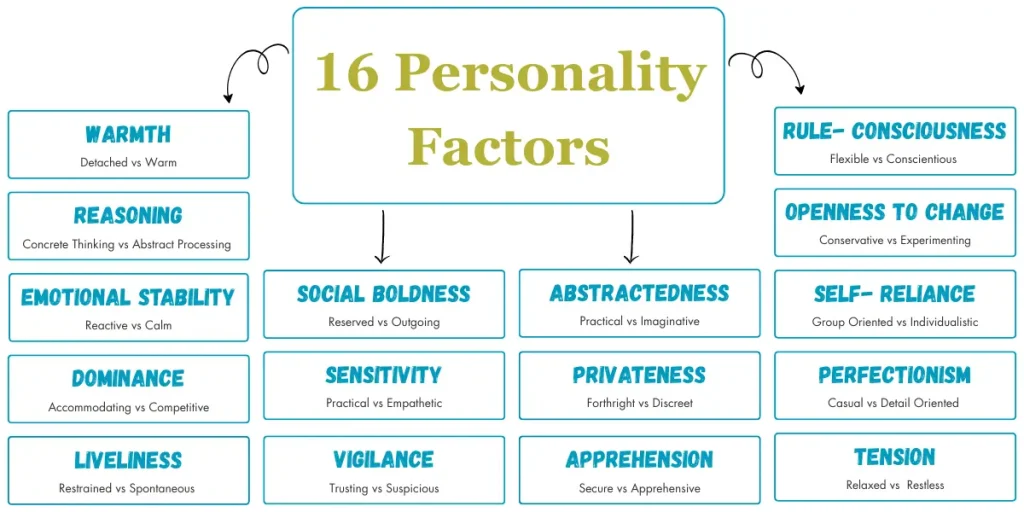
Developed by psychologist Raymond Cattell in the 1940s, the 16 Personality Factors (16PF) Questionnaire is a research-backed tool that measures 16 core traits, such as:
It also derives five global factors: Extraversion, Anxiety, Tough-Mindedness, Independence, and Self-Control. Unlike simpler tests like the Big Five, the 16PF provides a detailed profile based on over 185 multiple-choice questions, typically taking 30-50 minutes.
Questions use a forced-choice format, like:
I notice how others feel before I speak
Yes
Uncertain
No
Faced with a sudden opportunity, I
Embrace it with Excitement
Consider it Carefully before Deciding
Prefer to stick to Familiar Plans
Employers use it to identify risks, such as high anxiety under pressure or low teamwork potential. It’s widely applied in hiring, career counseling, and even marital advice, with norms based on thousands of professionals.
Why Prepare? The Stakes Are High
The 16PF isn’t easy to fake—validity scales detect if you’re trying to seem “perfect.” Answering without insight can flag you as rigid, unreliable, or unfit for leadership. Once scored, results are final; no do-overs.
Research shows personality traits predict job performance, so companies invest in these tests to reduce turnover and boost fit. But unprepared candidates often undersell themselves, getting screened out early.
16-PF Course Mastery
Last Updated: Sep 12, 2025
Course Content
-
Introduction 1 StepBuy this Course: Get full access to all lessons, practice tests and guides. -
Understanding the Traits 2 StepsBuy this Course: Get full access to all lessons, practice tests and guides. -
Understanding the Test Format 1 StepBuy this Course: Get full access to all lessons, practice tests and guides. -
Sample Questions & Strategies 1 StepBuy this Course: Get full access to all lessons, practice tests and guides. -

Practice Quiz 1 StepBuy this Course: Get full access to all lessons, practice tests and guides.

Our 16PF Prep Course: Designed for Real Success
Created by seasoned psychology professionals with real-world assessment expertise, this course gives you the tools to stand out. Here’s what’s inside:
- Clear Factor Guides – Simple explanations of all 16 factors and 5 global traits, with workplace examples and recruiter insights.
- 100+ Practice Questions – Realistic quizzes that mirror the test, with feedback showing what your answers reveal.
- Mistakes to Avoid – Learn how to spot subtle traps, like inconsistent responses that may flag your results.
- Career-Focused Strategies – Tailored approaches for leadership, sales, and teamwork roles—built on authenticity, not trickery.
- Quick Success Tips – Stay consistent, manage time wisely, and highlight your strengths.
This course is grounded in Cattell’s original framework and enriched with modern employment data—so you’re learning strategies that truly work.
Frequently Asked Questions (FAQs)
No. There are no “right” or “wrong” answers. When used for hiring purposes the test assesses how the candidate would “fit” in the work environment, whether or not the candidate is a liability or an asset. The test shows where you fall on 16 different personality scales. However, if your answers seem inconsistent or don’t align with the role’s requirements, it may reduce your chances of moving forward.
On average, the test takes 30–50 minutes to complete. There’s no strict time limit, but you’re expected to answer steadily without long pauses.
Questions are multiple choice with three options (e.g., Yes / No / Uncertain). They ask about everyday preferences, feelings, and behaviors—such as whether you enjoy being the center of attention, or how cautious you are with rules.
Yes. While you can’t “game” your personality, preparation helps you:
- Understand the traits being measured
- Avoid inconsistent answers
- Recognize what employers are really looking for
That’s exactly what our prep course is designed to do.
Not exactly. The MBTI sorts people into 16 types, while the 16PF measures your standing on 16 continuous personality traits, offering a more detailed and scientifically validated profile.
Inconsistencies happen when your answers don’t line up across similar items. For example, you might agree with “I enjoy being around people” but later say “I prefer to avoid groups.” A few small differences are normal, but too many contradictions can suggest faking, confusion, or lack of self-awareness. Employers may view inconsistent profiles as less reliable, which can reduce your chances of moving forward.

Created by: Tanoo Purohit
MSc - Clinical Psychology, Psychometric Tutor, Prepterminal Test Expert
48 students, 4.8, 26 Reviews
I’m Tanoo Purohit, with a BA honors and an MSc in Clinical Psychology from the renowned National Forensic Sciences University. Over seven years, I’ve studied the intricacies of the human psyche (as a part of my curriculum and practice). Proudly associated with PrepTerminal, I serve as a Psychometric Course Author and am recognized as a Psychological Test Expert. In every course I craft, I merge my expansive knowledge with relatable insights, ensuring that complex psychological concepts are presented with clarity and resonance for all learners. Feel free to contact me at [email protected]
